

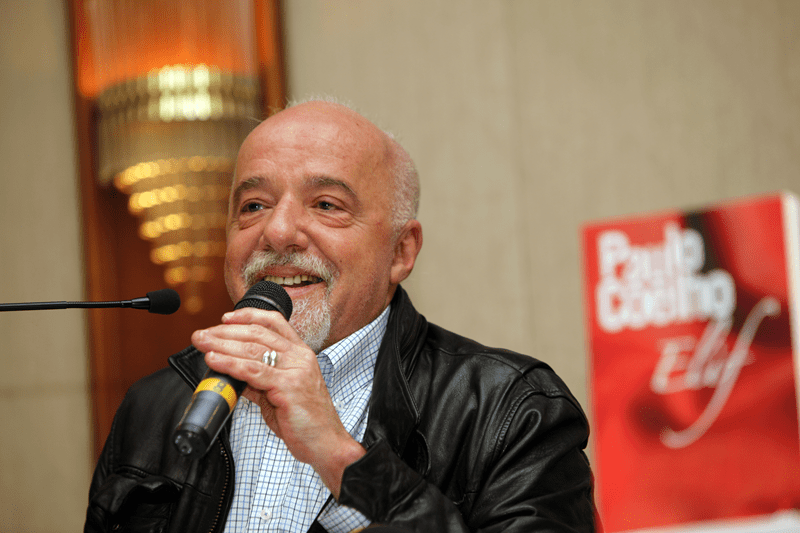
Paulo Coelho is a name that conjures a very specific kind of reader: one who is lured by adventures, whether those be physical and external or philosophical and internal, and who turns to reading as much to uncover meaning as to follow a story. If you are looking for the Paulo Coelho author life story, you will quickly realize that it is essentially a story of revolution, travel, spiritual awakening, and the unrelenting drive to tell the story of the soul's journey.
Here, we will examine his background as one of the inspirational authors, identify the occurrences that have influenced his philosophy, and distill the life lessons that have helped his spiritual fiction novels reach so many people.
The essence of Paulo Coelho author life story begins in Rio de Janeiro, which was the birth city of this middle-class child turned renowned author. Paulo Coelho author life story does not follow the typical path other academics-turned-authors take—the author’s childhood and adolescence consisted of rebellion against his parents, as well as an interest in the arts from a young age.
The young author rebelled against all regulations during his adolescence, which would inspire the author to write about pursuing one’s path in his works of fiction. Prior to his fame as an inspirational author, Paulo Coelho worked in theatre and as a journalist, with lyrics for songs and collaborations with musicians to boot.
One of the most pivotal experiences in Paulo Coelho author life regards his pilgrimage on the Camino de Santiago located in Spain, in 1986. This experience could be termed both literal and spiritual, marking the moment when he found the discipline and dream to write two of his most popular works.
The significance of this experience cannot be overlooked when it comes to Paulo Coelho author life story; it is where he experienced enlightenment about how common storylines should be capable of passing on messages of spirituality without ever being didactic in nature. Attaining this enabled him to achieve bestseller status within the genre of contemporary spiritual authors.
Coelho's sudden transformation from a humble literary presence to a global phenomenon is one of the aspects of the Paulo Coelho author life story that most readers consider no less incredible than his storytelling. His book, The Alchemist, about “a simple man and his Personal Legend,” which tells the story of a shepherd who sets out to realize his dreams, had a slow start but gained readers worldwide and became a bestseller in multiple languages.
What added to its rapid spread was its simplistic writing, focus on personal objectives, and life lessons easy enough to be shared, thus going viral well before the internet age, when going viral had become a frequent phenomenon. Of the inspirational authors, Coelho stands out with his reduced, easy writing that promotes multiple readings and citations, thus enhancing his position alongside best-selling authors of the contemporary world.
To grasp the essence of what puts Paulo Coelho at the top of the list of successful spiritual writers, observe the elements of his writing: “parable-level” storylines, archetypes for characters, and recurrent themes like destiny, love, sacrifice, and transformation.
His background as an author reflects his combination of spiritual pursuits and real-world experience with songwriting and journalism. “The simplicity of his prose” comes to play here—easy to talk to and share with friends; this explains why “people have come to regard him as an author who writes directly to their confusions and their hopes.” His works impart “universal and particular” life teachings: follow your vocation, listen to your intuition, take the leap of faith, and fail and learn from it.
It’s also important to consider what aspects of Coelho’s authorial background have also contributed to his being so accessible to his audience. Coelho did not have formal training in novel-writing in an ivory-towered program, but got his training in collaborative work in the arts, his passion for traveling, and his willingness to embrace spiritual teachings from various corners of the globe.
This also enabled him to write in what is also characteristic of inspirational authors’ writing: short statements, repeating refrains, and storylines meant to invite his readers back into their psyches, incorporating their teachings.
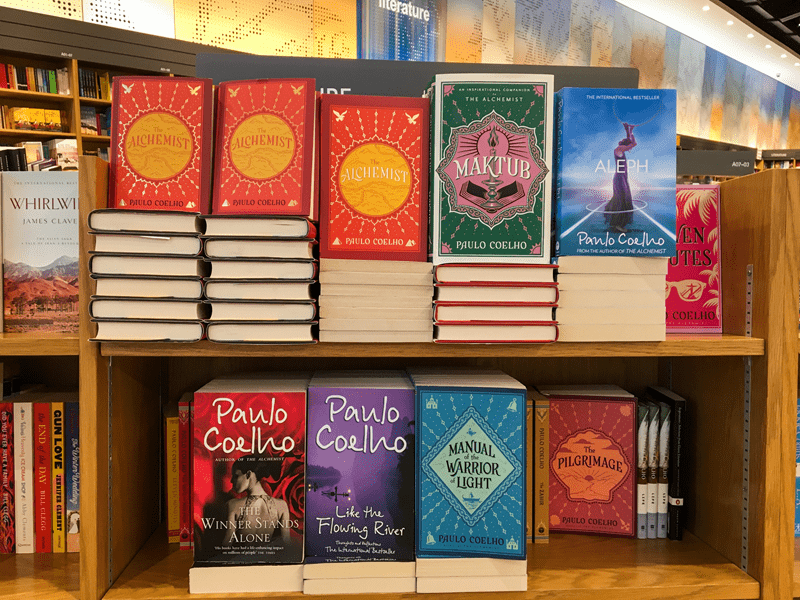
Again and again, Paulo Coelho author life story is mirrored in the "lessons for life presented on its pages." The books are both mirrors and maps. Some examples of "lessons for life that reappear in the books" follow:
Such lessons of life make him one among those best-selling authors because audiences need stories that offer possible transformations from within, not just riddles to be resolved in the brain.
This kind of global success vaults Paulo Coelho into a special category of inspirational writers who go beyond any religious or cultural boundaries. In contrast with biographical writers or clergymen who focus their thoughts directly into written ideas, his inspirational fiction transposes philosophical concepts into narratives.
Thus, Paulo Coelho, like successful writers who talk about universality—writers who write not just about one particular belief system—should be listed alongside bestselling authors who write about the universal condition, not about the specifics. This is why, in the U.S. itself, he can be found in reading lists designated for book clubs, classrooms, or corporate team-building sessions because his books can be easily shared and referenced.
Paulo Coelho author life story is the cultural model—in this sense, an example of an individual who has rejected the norms in order to seek their own enlightenment and speak simply about very complicated issues. The philosophical takeaways he provides for his American audience struggling with careers and technology have the effective shelf-like quality of “portable philosophy,” easily retrievable in short doses amidst busy schedules.
This is the trademark aspect of inspirational authors who endure the passing change of culture from one generation to the next—to address eternal themes within storylines requiring little more than surface-level interpretation.
If it is your introduction to Coelho, and you seek to experience both Paulo Coelho, author, and the messages found within his fiction, with The Alchemist, his underlying them, and with The Pilgrimage, his biographical beginnings. Veronika Decides to Die and Eleven Minutes address relationships and sexual desire, whereas Brida and The Valkyries place themselves more firmly within a mystical framework.
Such novels illustrate why Paulo Coelho is one of the genre-changing and spiritually attuned bestsellers, and within them, the range of life lessons accessible to both readers and readers-turned-book clubs.
If there is a plain truth to be gleaned from Paulo Coelho author life story, it is that the story can be a tool of transformation. Certainly, the author's life and transformation of Paulo Coelho have influenced the stories he has told, stories that distill the essence of life into memorable moments and phrases.
For American readers who are interested in spiritual novels or are looking for books by inspirational authors, Paulo Coelho provides an easy entry point: easy-reading chapters, easy-to-comprehend metaphors, and themes that recycle repeatedly around purpose, courage, and the subtle indications of a meaningfully lived life. Whether you agree or disagree with the lessons presented, a key habit is promoted by his books and author background: analyzing your decisions within the framework of meaning. All book titles, character concepts, and author references are mentioned strictly for informational and biographical purposes under fair-use principles. No copyrighted text or proprietary content has been reproduced.
Paulo Coelho author life story from which people derive inspiration, has come to be associated with persistence, self-discovery, and transformation. His unusual experience as an author, involving rebellion, struggles in creation, and undergoing a pilgrimage that changed his life, has come to resemble those of his protagonists in literature. This has enabled his audience to derive lessons from his real-life journey based on his spiritual fiction writings because it matches those lessons and teachings in his books.
Unlike other motivational writers who pen articles or self-help volumes, Coelho favors the use of storytelling as one of the methods used to communicate with the world. His religious fiction combines simplistic writing styles with symbolic storytelling and common subject matter, and this gives readers the opportunity to find meaning in the text by themselves.
Through his writings, Paulo Coelho reinforces various lessons from life, including the idea of personal destiny, trusting one’s intuition, using failure as an opportunity for growth, and interpreting indicative signs given by life. These are some of the reasons why his writings have touched so many lives and why his books are so popular among his audience.
This content was created by AI