


The influence of Jane Austen on literature remains one of the most lasting legacies in the history of literature. Her works lie at the intersection of classic authors, romantic fiction, and historical fiction. This gives her a prominent position in the universal cultural landscape of literature. From the early 19th century to the present day, the influence of Jane Austen on literature has guided women authors and altered the depth of emotions in fiction.
The strength in Jane Austen’s literary impact is in how she is uniquely capable of maintaining a good blend of comedy, realism, and truth. It is not just romantic novels when it comes to Austen. It is actually more in-depth in terms of society. She is one of the most analyzed female authors in literary history.
The influence of Jane Austen on literature is an important milestone in literary history because she was one of those authors who changed the way novels are written. Most authors before Jane Austen used their novels to describe history because their main focus was on heroes and all other events that took on an epic proportion.
Her methods of storytelling, such as the use of free indirect discourse, irony, and complex moral structures, led the way towards new forms of narrative. "Jane Austen's literary influence" is connected to the rising status of the novel as a literary art form, influencing writers who followed. In literary history, her work represents a transition from rationalism to romanticism.
Austen's contribution is also found in the way she limited herself. Austen did not rely on plot devices for the sake of taking, opting instead for the psychological element. This made her novels ageless. This is still something that is followed by classic authors and now current ones alike.
Jane Austen's influence on literature helped to promote romance novels from being just ‘love stories.’ In fact, her writing highlights the aspect of respect, maturity, and self-growth within relationships, as opposed to the idea of ‘passion.’
Unlike other romantic works that existed before her and relied very much on the ideal romance theme, Jane Austen wrote realistic romance novels. This is because the women characters in those novels are very much rational and reject societal standards when it comes to the selection of romantic partners on the grounds that romantic partners must possess good character. Jane Austen's literary example created a standard in romantic writing that emphasizes mind, freedom, and morality.
Today, the romance novels that are published also carry the imprint of Jane Austen, from the character-driven storylines to the relationships that develop through emotional authenticity. Austen's definition of romance continues to shape the concept of romance and its possibilities.
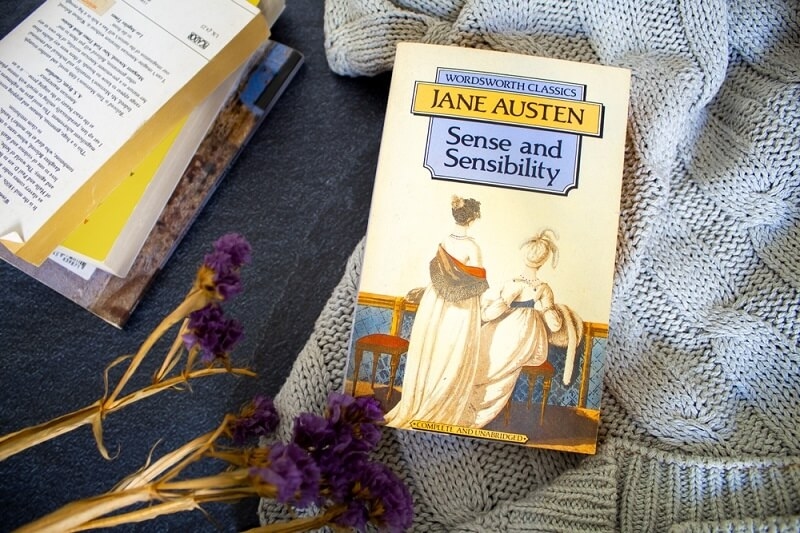
The importance of Jane Austen’s literary influence becomes exceedingly clear when considering women’s literary contributions throughout literary history. Jane Austen defied conventions when she penned literary works in a society where women’s literary contributions could easily be overlooked and discredited.
She paved the way for other female writers by showing them that domestic and personal topics could be considered literary themes. Jane Austen’s literary impact led to the empowerment of female authors to take up themes of identity, independence, and social roles in literary works.
However, her success defied the male-dominated literary genres. Today, Austen is widely recognized as a trailblazer who made significant contributions to the normalization of women's viewpoints in literature.
The influence of Jane Austen's literature can be traced far back into the works of the classic authors of the latter periods. Authors like George Eliot, Henry James, and E.M. Forster were impressed by the psychological realism and moral insight of Austen.
Traditional writers were known to adopt the characteristic of showing complex emotions in dialogue and social interactions subtly, as done by Austen. The influence of Jane Austen's literary style inspired other writers to question society’s values without the need to moralize explicitly and leave the interpretation to the reader’s judgment.
This literary tradition contributed to the evolution of the modern novel, where the struggle within and the growth of the hero may even take precedence over the events taking place outside.
The influence of Jane Austen’s literature is inextricably intertwined with the tradition of historical fiction novels. Even though she wrote about her own era, her meticulous description of Regency society is a great resource for historiography.
She portrays the society and the roles of females and the classes with an accuracy that is remarkable. The Jane Austen literary influence enables readers to feel the experiences while studying history.
Many contemporary novels that are historically grounded base their approach on Jane Austen’s technique of offering insights into societal aspects by using individual experiences. This is how history remains interesting and understandable.
The influence of Jane Austen goes beyond the bookshelves to film, television, and popular culture. Films based on Pride and Prejudice, Emma, and Sense and Sensibility have captivated audiences worldwide.
There are modern-day adaptations in novels and romantic comedies of movies, which borrow the storylines and characters from Jane Austen's works. An example of Jane Austen's literary influence in fiction would be love stories combined with themes of misunderstanding and characters transforming due to social pressures.
Her writings continue to be relevant to society because she addresses some of the universal experiences of human beings, and this shows that great literature never ages.
Influence of Jane Austen on Literature: The reason for the continued impact of Jane Austen on literature is that the subjects of her writings remain universal. Topics of love, identity, morality, and social pressure are no less relevant today than they were two centuries ago.
Her characters portray true human qualities of weakness and strength, and provide her readers with an opportunity to identify themselves with those characters in her novels. The Jane Austen literary influence instills in the readers the value of self-awareness and sound judgment in decision-making.
But in the increasingly rapid-paced world of the digital age, the deliberate act of storytelling displayed in Austen’s writings provides a sense of depth, contemplation, and emotional intelligence that has continued to lure
The influence of Jane Austen is an essential part of literary history because her work is widely referenced and studied. Her novels are being critically analyzed by scholars for their social comments and feminist overtones.
Her impact is instrumental in dictating literature’s progression with tradition as its basis. Jane Austen’s literary influence relates past and present in literature by emphasizing how good literature has truth, observation, and empathy at its core.
So long as literature maintains the ideals of character, simplicity, and depth of feeling, Austen's place will not come to be diminished.
The influence of Jane Austen is not just in the past; rather, she currently contributes to writing, reading, and interpreting stories. Importantly, she has made a mark in romance novels, historical fiction, and women's authors.
Austen's ability to combine realism with insight into the human psyche redefined the potential for the novel form. Her contribution has continued to galvanize readers and authors alike, ensuring that she is one of the greatest authors from the classic period.
The influence of Jane Austen's literary work is important because her literary themes, such as love, morality, and social issues, are still valid today.
Influence of Jane Austen on Women Writers The influence of Jane Austen encouraged female writers by showing that a female viewpoint could provide significant social criticism and lasting artistic merit within the context of literary history.
Indeed, a positive influence of Jane Austen on romance novels is the shift from idealized and fallacious relationship portrayals to a more realistic attitude.
Jane Austen's literary influence offers very detailed insight into the life and times of the Regency period and thus serves as a very good example of historical writing.
Classic writers such as George Eliot and Henry James took advantage of the literary influence of Jane Austen in terms of character creation and realism in writing style.
This content was created by AI